Touchscreen, gestures or movement. Interactive floors and walls where the chosen setup supports them.
Where it comes to life
A stand, exhibition, retail space or touring activation. Short rounds with a reset between players.
Worlds shaped by your brand.
Three directions to imagine what your brand could invite people to play. Creative starting points to develop around your brief.
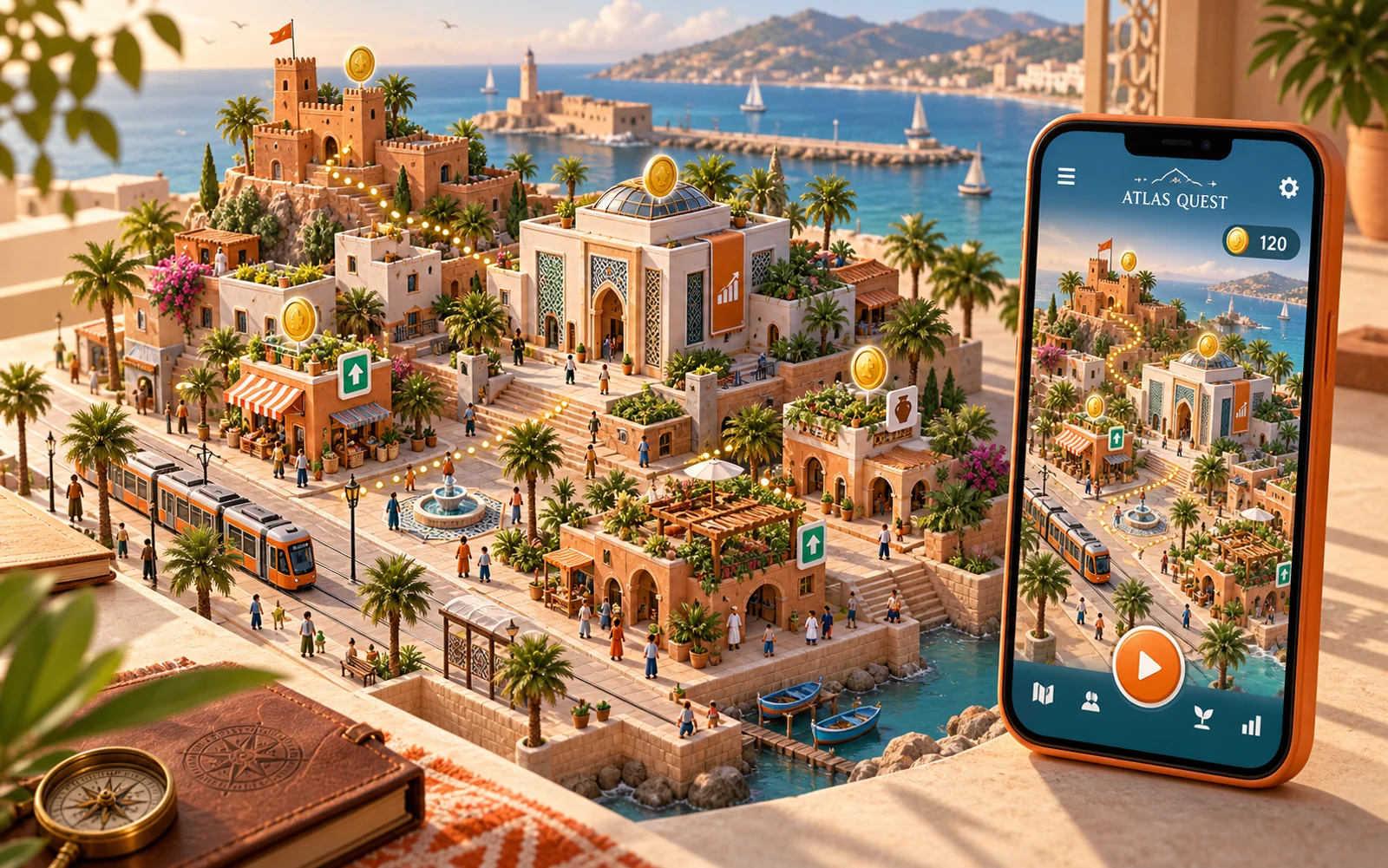
Financial education
Build tomorrow.
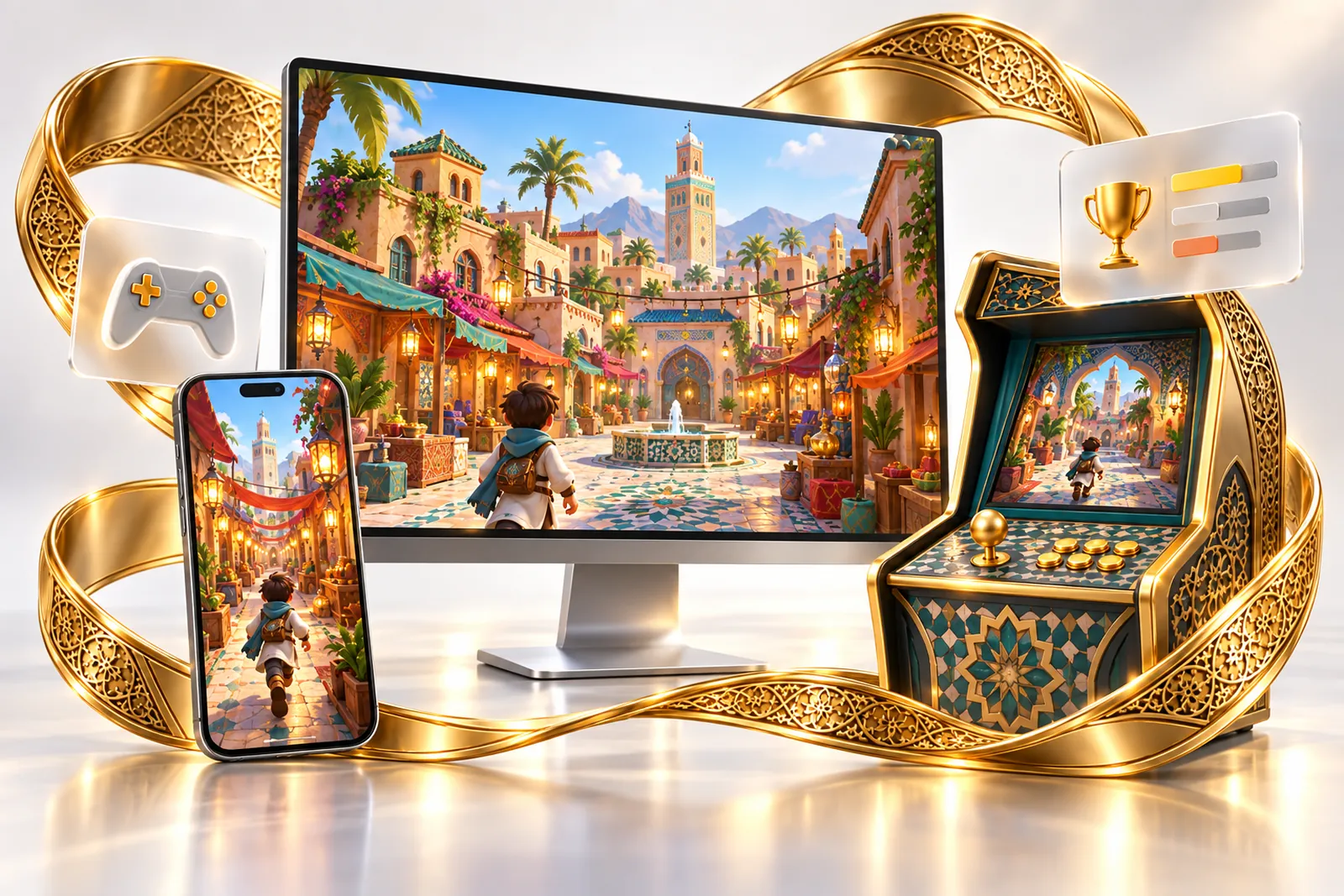
A miniature Moroccan city where every choice grows a neighbourhood. Players learn to manage a budget by bringing their projects to life.
Mobile / Touch
What makes it fun
Complete missions, balance resources and watch the city evolve.
Where the brand belongs
For the banking sector: make saving and budgeting tangible through play.
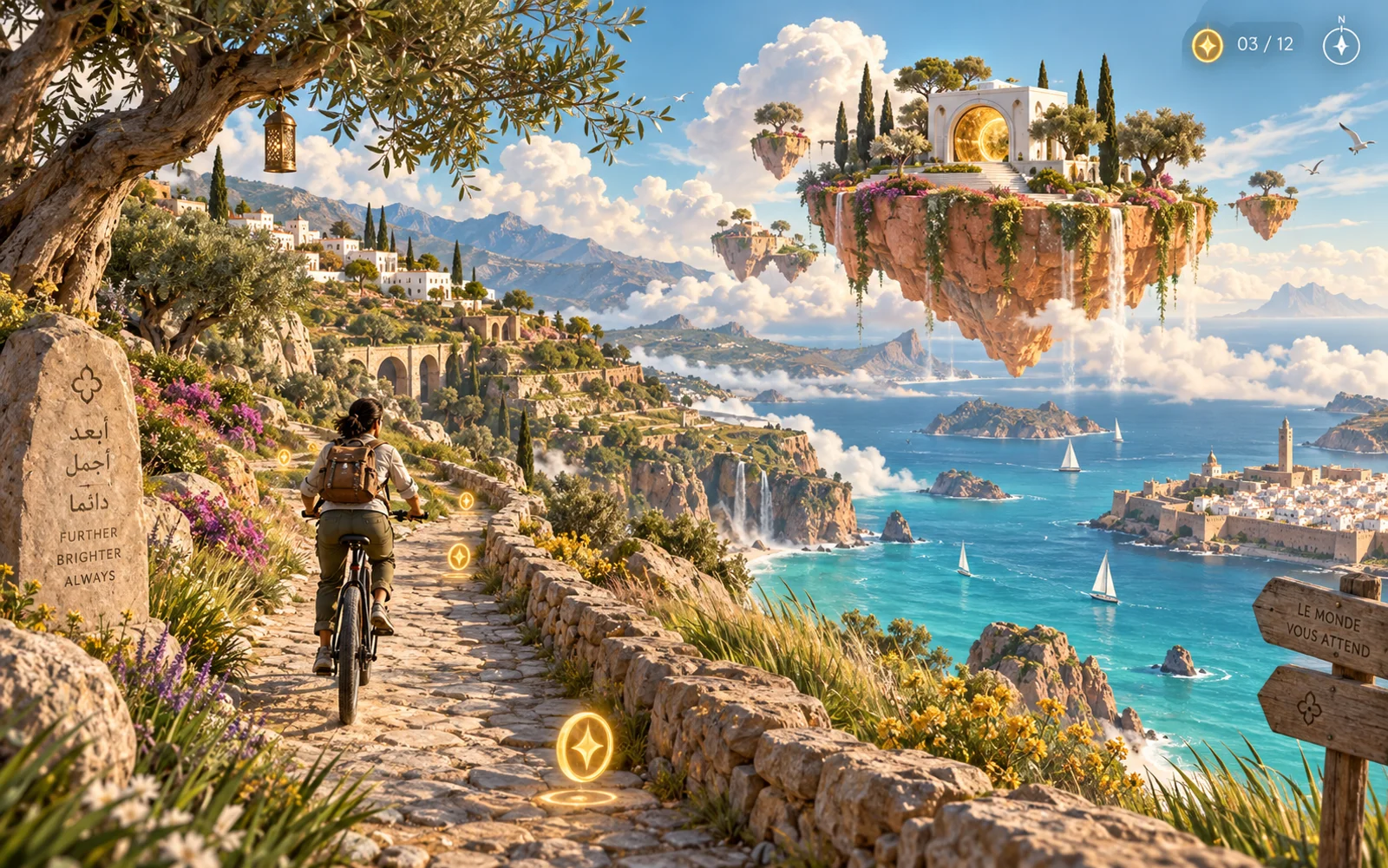
Brand exploration
An island of possibilities.
A vibrant island, hidden paths and treasures to find. The brand’s identity becomes a place people want to explore.
Web / PC
What makes it fun
Roam freely, solve puzzles and unlock new areas.
Where the brand belongs
Introduce a story, products or commitments through quests and the world around them.
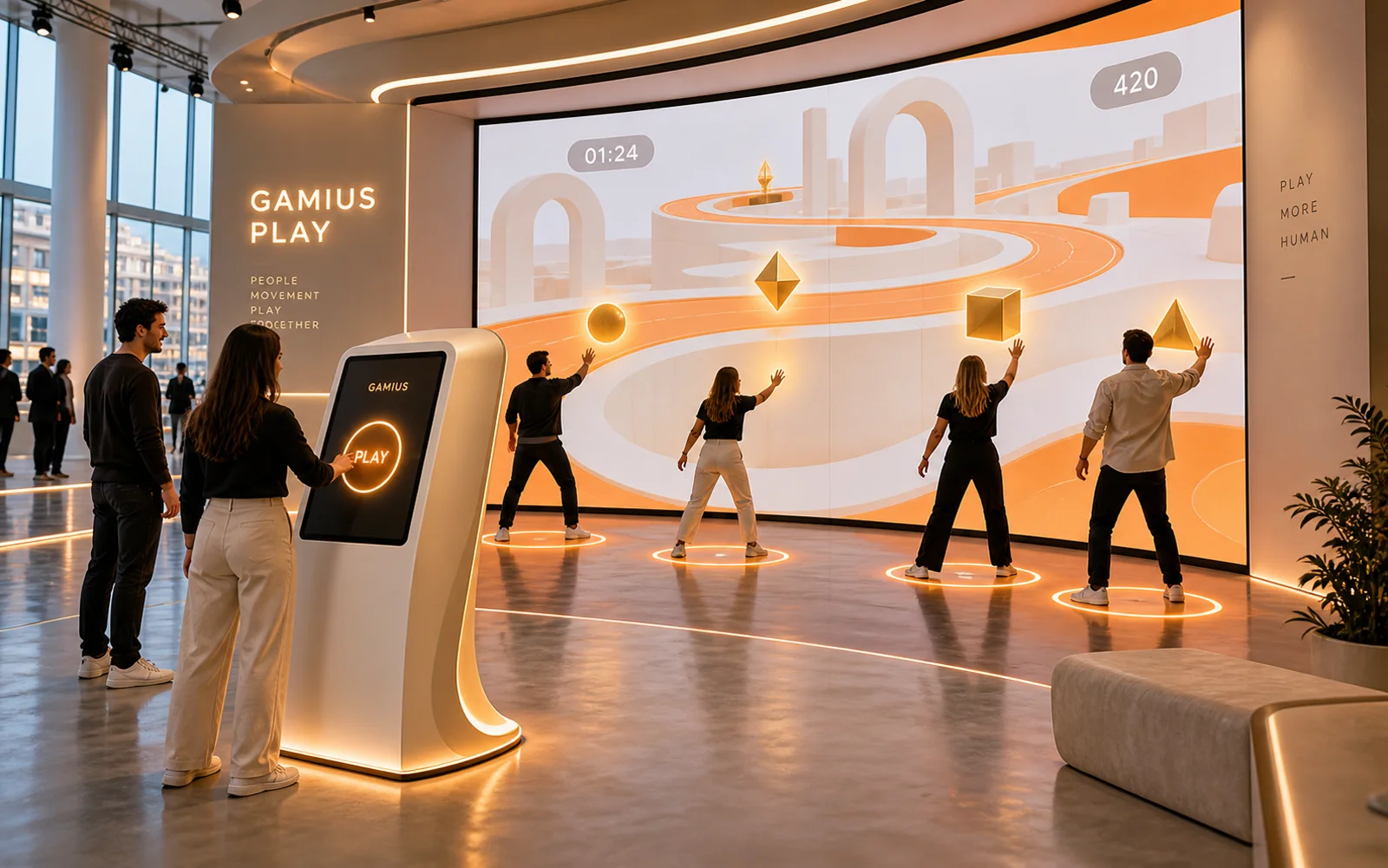
Event activation
Step into the game.
A space that reacts to its players. A shared challenge travels from kiosk to floor to wall, bringing the whole crowd into play.
Kiosk / Interactive floor & wall
What makes it fun
Move, cooperate and trigger visual reactions across the space.
Where the brand belongs
Give visitors an active role and create a shared brand moment at the event.
Before gameplay, a feeling.
The pull of a journey, a colour, a movement. These references start a conversation about how your world could make people feel.
Supplied mood references — third-party works, not produced by GamiusGroup.
Movement as an invitation
A CGI cyclist travels through sunlit green countryside, beneath a blue sky with wind turbines.
Colour as a feeling
An anime-style boy in a windswept wheat field, in the light of the setting sun.
Back for the game.Remembered for the brand.
The fun comes first. Your brand’s goals give the experience a direction.
A brand in the mechanics.
Your products, values or story shape players’ choices. The identity goes beyond a logo.
A reason to return.
Progression, fresh challenges and discoveries make another round worthwhile. Retention starts with game design.
A crowd that takes part.
At an event, clear rules and a quick start invite people to try, play together and pass the turn.
Results you can understand.
Participation, completed rounds, return visits and voluntary opt-ins: we agree on useful measures together, before launch.
Metrics are defined around your objectives, with data collection subject to consent.
From the brief to the first round.
A production process with clear review points. We test the fun before expanding the world.
01
Brief
Audiences, goals, use cases, budget and practical constraints.
02
Game design
Concept, rules, progression and the brand’s role in the game.
03
Prototype
The first playable deliverable: a mechanic to validate how the game feels. Its validation criteria are agreed at the scoping stage.
04
Art & development
Art direction, interfaces, sound and code take shape.
05
Playtests
Players try it. We refine the pace, clarity and accessibility.
06
Deployment
Release or installation, measurement setup and agreed support.
Imagined here. Played everywhere.
Support in Morocco, from the creative brief to on-site activation. Languages, cultural references and real playing conditions are part of the design.
Design and project support in French and English.
Questions before you start.
The precise answers depend on your project: we set them together at the scoping stage, before the quote.
What does the budget depend on?
Mainly the platform (mobile, web, PC or kiosk), the scale of the game (mechanics, levels, content), the art direction, the number of languages, any integrations needed (sign-up, data collection, leaderboards) and, for a kiosk, the hardware and on-site presence. The quote is based on the scope agreed at the scoping stage.
How long should we allow?
It depends on the scope and the review stages: the schedule is confirmed at the scoping stage. If you have a fixed date (a launch or an event), mention it in your request so it is taken into account from the start.
What should we prepare?
The game’s objective, the target audience, where or how it will be played, and your target date. If you have them: your brand guidelines, the content to include (products, messages) and any technical or legal constraints. An incomplete brief is enough to start: scoping is there to complete it.
Who hosts and maintains the game? Who owns the deliverables?
Hosting, maintenance and ownership of the deliverables (code, visuals, sound) are defined at the scoping stage, depending on your project. If you already have expectations on these points, include them in your request.
What happens after launch?
Follow-up is agreed with you before release: metrics to track, fixes, content updates, depending on your needs. Its extent is decided at the scoping stage, along with the rest of the scope.
Your turn to start something
What if your nextproject was playable?
Tell us about your brand, your audience and your playing field. Let’s put the first brief together.